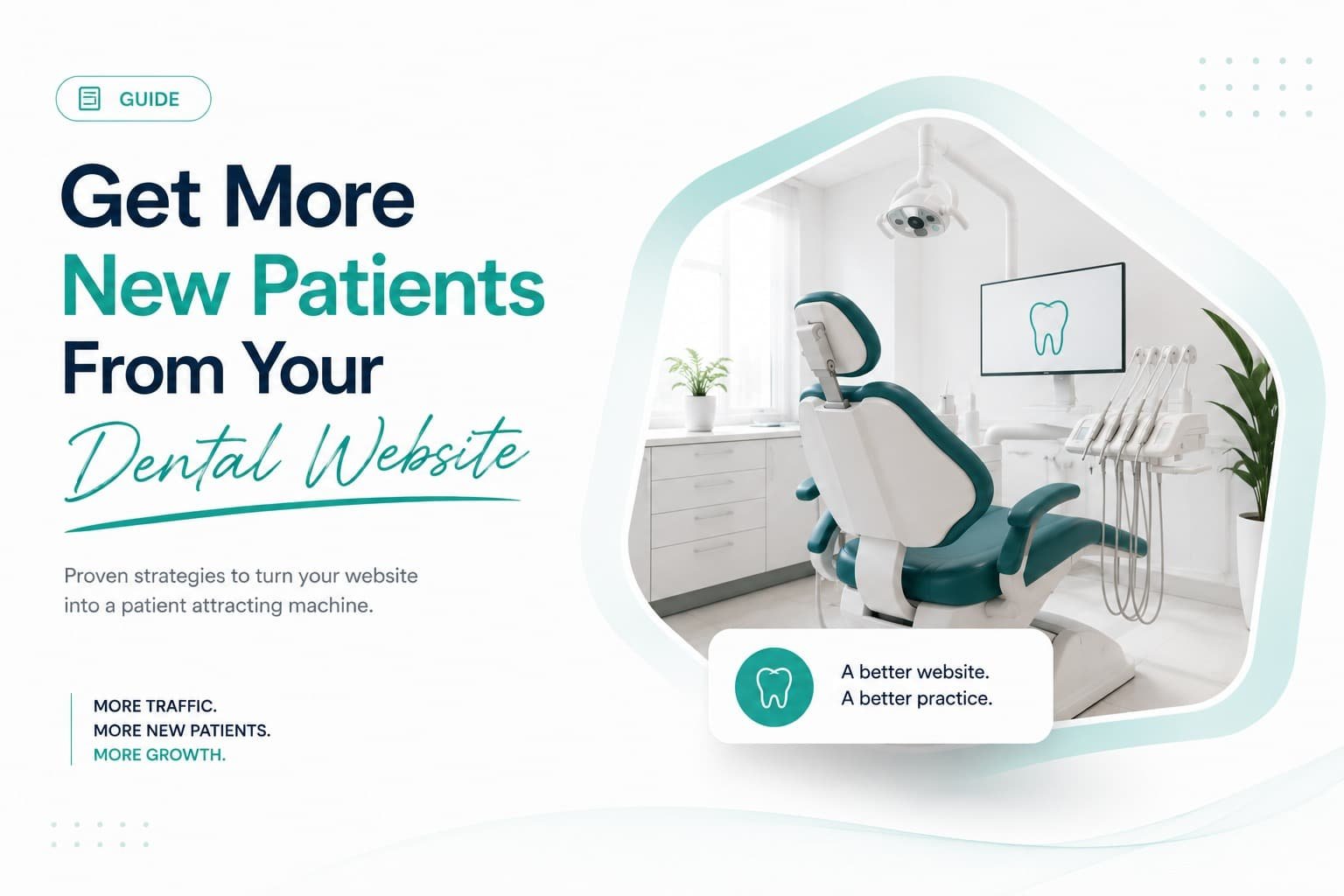
The fastest way to get more new patients from your dental website isn’t more traffic. It’s converting more of the visitors you’re already getting, by winning the comparison against the other practices they have open in other tabs, easing dental anxiety, answering the insurance question before they have to ask, and making booking effortless. Traffic costs money every time. Conversion is nearly free, and it compounds, since one new patient in dentistry is rarely a single appointment. They’re the start of years of cleanings, the occasional filling, maybe cosmetic work down the road, plus whoever they refer.
Most dentists reach for the same lever when they want more patients: more ads, more spend, more clicks. That can work, but it skips over a cheaper win sitting right in front of them. Nudging a website from three new patients a month to six isn’t a small bump. Over time it’s one of the most valuable things a practice can do, and it doesn’t cost a cent more in ad spend.
The path from “person Googling a dentist” to “booked new patient” runs through a handful of decisive moments. At each one, a visitor either keeps going or quietly closes the tab. Get those moments right and the same traffic starts producing noticeably more patients.
Key Takeaways
- Converting more visitors beats buying more traffic. It’s cheaper, faster, and each new patient is worth years of care and referrals.
- The journey from search to booking has a few make-or-break moments: getting found, winning the comparison, earning trust, answering the money question, and making booking effortless.
- Reviews and reassurance win the click. Nearly all patients read reviews first, and anxiety is the barrier most sites ignore entirely.
- Cost is a silent dealbreaker. Practices that answer “do you take my insurance?” on the site convert patients that other practices quietly lose.
- A booked patient isn’t the finish line. A great first visit and a simple review habit turn one new patient into several.
Step 1: Make Sure They Can Find You at All
You can’t convert a visitor who never arrives. Before anything else, your practice has to show up in that first “dentist near me” moment, the one that now happens on a phone, often with Google Maps, reviews, and websites all appearing together in a single glance.
For most practices, the biggest untapped source of new patients here is the Google Business Profile. It’s free, it’s where patients look first, and a complete, active one consistently outperforms a neglected listing. Fill out every field, keep hours and services accurate, add fresh photos, and build a steady habit of asking happy patients for a Google review, since this is the part practices tend to forget. Reviews don’t just influence people, they lift your ranking in local search too, so practices actively earning them keep climbing while everyone else stalls.
If you take one thing from this step, it’s that your website and your Google presence are one system. The listing gets you seen, the site closes the deal. Neglect either one and the whole thing leaks patients.
Step 2: Win the Click, Because They Have Other Tabs Open
Your prospective patient rarely looks at just you. They open three or four practices in tabs and compare. So the real question isn’t “is my site good?” It’s “does my site win when it’s sitting next to two competitors?”
Two things decide that comparison more than anything else. The first is your reviews. Nearly all patients read them before choosing a dentist, and a growing share won’t even consider a practice rated below 4.5 stars. If your Google rating is strong, put it where a visitor sees it in the first second, on the homepage, not hidden on a separate tab. Choose the reviews you feature carefully too: a specific story (“I was terrified after a bad experience years ago, and they were unbelievably gentle”) does far more work than a generic “great service.”
The second is the feeling of your homepage in those opening seconds. A warm, human first impression, real photos of your actual team, a headline that sounds like a person wrote it, room to breathe, beats a cold, clinical one every time, especially for an anxious patient who’s already half-looking for a reason to close the tab. You don’t win the comparison by being the fanciest site. You win it by feeling like the safest, friendliest choice.
Step 3: Turn Anxiety Into Trust
This is the step almost every dental site underplays, and it’s where a practice can quietly pull ahead. Dental anxiety is common and well documented, and it’s often the real reason a visitor hesitates, even when they’d never say so out loud.
A website that actively calms that fear converts people other practices scare off. A short, friendly video of the dentist on the homepage is probably the single most underused tool in the field. Sixty to ninety seconds of simply talking, who you are, why you do this, what a first visit feels like, lets an anxious patient meet you before they ever sit in the chair. Practices that do this tend to see fewer first-visit no-shows, because patients arrive already feeling like they know you.
Beyond the video, a plainly worded “nervous about the dentist? here’s how we make it comfortable” section signals empathy and pulls in the very patients who’ve been avoiding care. Mention your gentle approach, sedation or comfort options, and what to expect step by step. Fear thrives on the unknown, so the more you demystify the visit, the more of those patients you’ll win over.
Keep the trust signals honest and human throughout: real credentials in plain language, genuine photos, a clean, modern feel. In healthcare, trust isn’t a section of the site. It’s the whole job.
Step 4: Answer the Money Question Before They Ask It
Ask any front desk what patients ask first, and “do you take my insurance?” is right up there. It’s a silent dealbreaker. A visitor who can’t find the answer often just leaves and looks it up on a competitor’s clearer page instead.
Put the answer where they can find it. List the insurance plans you accept in plain language. Explain financing options without making anyone email to find out. If you offer a membership plan for uninsured patients, feature it, since those patients tend to visit more often and accept more treatment, which is good for them and for the practice. A simple, honest new-patient offer, an exam, X-rays, and a cleaning at a set price, can be the nudge that tips someone comparing you against the practice down the street.
Being upfront about cost feels backwards to a lot of dentists. In practice it does two good things at once: it builds trust, and it filters for patients who are actually ready to book. Transparency converts.
Step 5: Make Saying Yes Effortless
By this point the hard part is done. They trust you, and they’re ready. Don’t lose them at the finish line by making booking a chore. Every extra step between “I’m ready” and “I’m booked” is a chance for a nervous person to reconsider.
The biggest single upgrade here is real online booking. Let someone claim a slot at 10 p.m. when they finally remember they’ve been putting it off, without waiting for the office to open. A growing share of patients expect to schedule and get reminders without ever making a phone call, and after-hours bookings are appointments you simply aren’t capturing today if calling is the only option.
Round it out by keeping request forms short, name, phone, email, reason, preferred time is plenty, making your phone number tappable on every page for the callers who prefer that, and placing a booking option in a few spots so no one has to hunt for it. Smooth the path down to almost nothing and more ready patients actually cross the line.
Step 6: A Booked Patient Isn’t the Finish Line
This is the part that compounds. Getting the appointment is the goal of the website, but getting more new patients over time depends on what happens next, because a great first experience quietly turns one patient into several.
When a new patient has a genuinely good first visit, two valuable things become easy. First, you can ask for a review while they’re still glowing, right there in the office, after a positive appointment. That fresh review lifts your local ranking and helps win the next stranger comparing tabs. Second, happy patients refer, and referred patients arrive already sold. A simple, consistent habit of asking, by the dentist or hygienist, at the moment someone expresses relief or gratitude, is one of the cheapest, most reliable growth levers in dentistry.
The loop closes on itself: a website that books more new patients feeds more good first visits, which feeds more reviews and referrals, which brings in more new patients. The site kicks it off, but the experience keeps it spinning.
A Few Wins You Can Make This Week
- Pull your three or four best, most specific Google reviews onto your homepage.
- Make your phone number visible and tappable on every page.
- Add a clear “Book Online” button next to it, and if you don’t have online booking yet, put that at the top of your list.
- Add a short, plain-language line about insurance and financing somewhere visitors will actually see it.
- Record a 60-second phone video of the dentist saying hello, and put it on the homepage.
None of these require an ad budget. They just help more of the people already visiting decide to become patients.
How to Tell It’s Working
Watch two things, nothing more complicated is needed. First, are new-patient calls and online bookings going up, even if your traffic is flat? That’s conversion improving, which is exactly what you want. Second, look at how many people reach your booking or contact page versus how many actually complete it. A big drop-off there usually points to a form that’s too long, or a trust or cost question you haven’t answered yet. Fix the leak and watch the gap close.