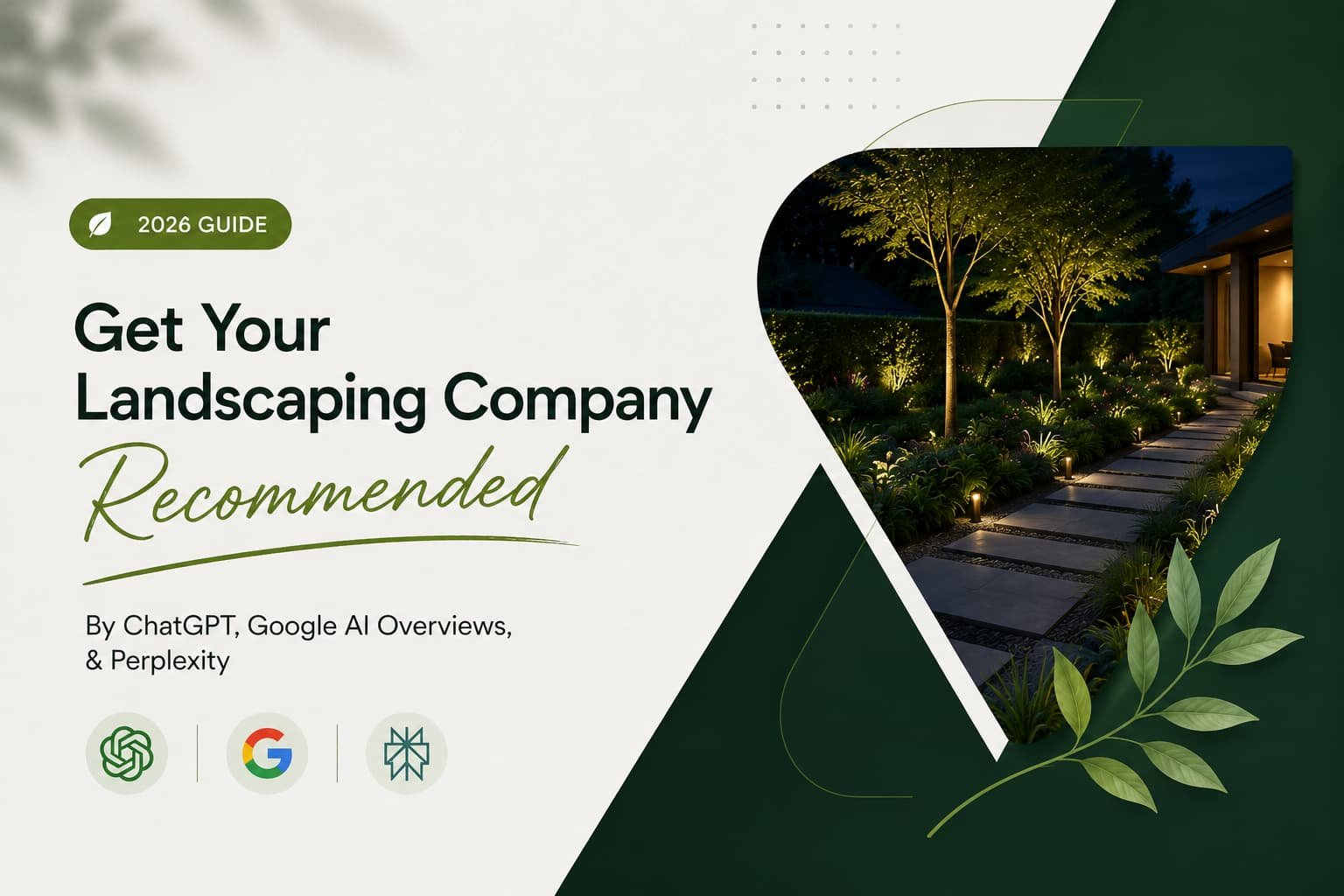
AI tools recommend the landscapers they can verify are real, well-reviewed, and consistently described across the web. You become one of them by nailing your Google Business Profile, earning steady reviews, keeping your business details identical everywhere, and getting mentioned on the sites AI trusts. That’s the short version. Here’s the full playbook.
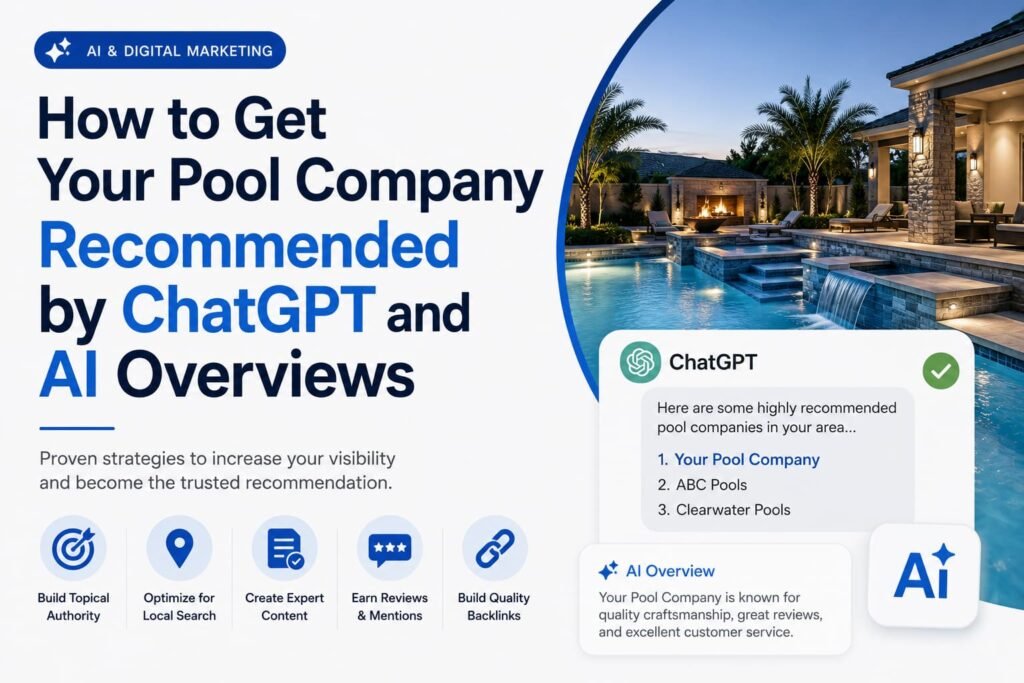
More homeowners are skipping the search bar and just asking an AI, “who’s the best landscaper near me?” and the tool names a company or a few without them ever scrolling Google. If that company isn’t you, you’re invisible to a fast-growing slice of buyers.
Why This Matters Now
A growing share of people now ask AI tools for local business recommendations instead of searching directly, and that share has climbed sharply in a short time. Google’s AI Overviews already appear on a large portion of searches too. This isn’t a someday problem. It’s happening in your market right now, and most of your competitors have no idea it’s a lever they can pull.
Key Takeaways
- AI doesn’t guess. It pulls from your Google Business Profile, your reviews, and what other sites say about you.
- Consistency is everything. If your business details clash across the web, AI loses confidence and drops you.
- Third-party mentions matter more than your own site. You’re likelier to be recommended via review sites and local roundups than your homepage alone.
- Clear, well-structured content that answers real questions gets pulled into AI answers.
- Let AI crawlers in, or none of this works.
How AI Actually Decides Who to Recommend
It’s less mysterious than it sounds. When someone asks for a landscaper, AI tools assemble an answer from the sources they trust most: your Google Business Profile and Maps data, your reviews and ratings, and how your business is described across other websites. Then they cross-reference those sources for agreement. A business that looks real, active, and consistent everywhere gets recommended. One with thin reviews or mismatched details gets skipped.
So the work isn’t about tricking an algorithm. It’s about being genuinely findable, trustworthy, and consistent. Here’s the playbook.
1. Nail Your Google Business Profile
This is AI’s number-one source for local recommendations, so an incomplete profile is the most expensive gap you can leave. Set the right primary category, Landscaper, Landscape Designer, or Lawn Care Service, fill out every field, list your services and service areas, add recent real project photos, and keep your hours and details accurate. A complete, active profile is the foundation everything else sits on.
2. Win on Reviews
AI weighs reviews heavily when deciding who to name, and it looks at three things: how many you have, your average rating, and how recent they are. A steady stream of fresh reviews signals a currently active, currently chosen business. Build a simple habit of asking every happy customer for a Google review right after the job, and respond to all of them. Steady beats a big old pile.
3. Keep Your Business Details Identical Everywhere
This is where most companies quietly lose. AI cross-references multiple sources before recommending anyone, so if your name, address, or phone number differs across your website, Google, Yelp, Angi, and Houzz, or you have duplicate listings, AI loses confidence and leaves you out. Audit your details across the web and make them match exactly. It’s unglamorous and one of the highest-impact things you can do.
4. Get Mentioned on the Sites AI Trusts
Here’s the counterintuitive part: third-party sources tend to get cited by AI more often than a business’s own website does. AI trusts what others say about you more than what you say about yourself. So build presence where it looks. Claim and complete your profiles on Yelp, Angi, Houzz, and the Better Business Bureau. Get listed in local “best landscapers in [city]” roundups. Earn genuine local press or community mentions. Be present, authentically, where homeowners discuss recommendations, like local Reddit or Facebook groups.
Every consistent mention on a trusted site makes AI more confident recommending you.
5. Structure Your Website So AI Can Read It
AI pulls answers from content it can easily extract, so make yours easy. Answer real questions directly by publishing clear pages on the things people ask AI, “how much does a paver patio cost in [city],” “best time to landscape in [region],” each leading with a direct, plain answer. Give each service and service area its own page, so AI can match you to specific queries. Add an FAQ written in natural, question-form language. Use schema markup, LocalBusiness and FAQ, so search engines and AI clearly understand your business and services.
Well-structured, genuinely helpful content is what gets quoted, not marketing fluff.
6. Let AI In (The Technical Bit)
None of this works if you’ve locked AI out. Check your robots.txt allows the AI crawlers, GPTBot for ChatGPT, PerplexityBot, Google-Extended for AI Overviews and Gemini, and ClaudeBot. If any are blocked, those tools literally cannot recommend you. It’s worth adding a simple llms.txt file too, a short plain-text overview of what your company does and where, so AI systems can parse your basics without rendering your site.
What Not to Do
Don’t keyword-stuff. Unlike old-school SEO where it was just useless, stuffing actively lowers your AI visibility. Don’t fake reviews. AI cross-references sources, and inconsistencies get you dropped, plus it’s against every platform’s rules. Don’t block AI crawlers and then wonder why you’re never recommended.