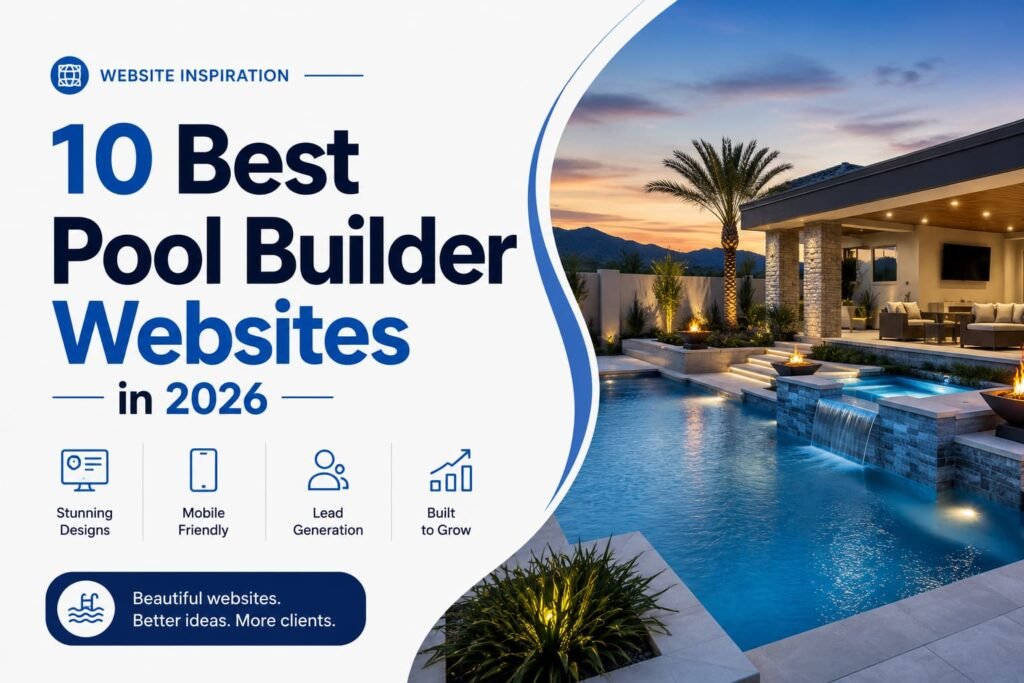
Social media marketing for a pool builder means staying visible during a long research window, weeks or months of a homeowner quietly dreaming about their backyard, so that by the time they request a consultation, your work is already the standard they’re comparing everyone else to. Instagram and Pinterest carry the most weight for inspiration, Facebook adds community reach and precise ad targeting, and YouTube doubles as a search engine for long-form project content.
A homeowner who decides they want a pool doesn’t pick up the phone that afternoon. They spend weeks dreaming about it first. They save photos, watch backyard transformation videos, browse design ideas late at night, and follow the builders whose work keeps catching their eye. By the time they request a consultation, they often already know which company they want.
That’s exactly the dynamic that makes social media so powerful for pool builders. You’re not trying to close a sale in a single post. You’re staying visible during a research window that often runs two to four months, building familiarity with homeowners who are quietly deciding. The builder who showed up consistently in their feed, whose work made them stop scrolling more than once, has a significant advantage before a single conversation happens.
This guide covers how to build that presence, which platforms are worth the effort, what content actually works, and how to turn social engagement into real consultations.
Why Social Media Works Differently for Pool Builders
Most home services use social media reactively, announcing sales or responding to reviews. Pool building is one of the few trades where social media can genuinely pull a homeowner toward you over weeks of passive influence.
The reason is the product itself. A custom pool is aspirational, visual, and deeply personal. People dream about it. They imagine summer evenings outside, their kids in the water, the backyard they’ve always wanted. Social media is exactly where people go to feed that kind of dreaming, which means a pool builder who shows up beautifully and consistently there is inserting their work into the research process at its most emotionally charged stage.
The goal isn’t a like or a follow. The goal is to be the builder they recognize and think of when they’re finally ready to move forward.
The Platforms That Actually Matter
Not every platform is worth the same investment for a pool builder. Focus on these four.
Instagram is the primary platform for pools. Its visual format suits the work perfectly, the audience skews toward homeowners in the buying-age demographic, and the content formats available, posts, Reels, Stories, carousels, give you flexible ways to show finished work, behind-the-scenes progress, and customer outcomes. If you have limited time and can only be active on one platform, Instagram is the one.
Facebook reaches a broader and often older demographic, which aligns well with homeowners making a major backyard investment decision. Facebook Groups are particularly useful: local community groups and neighborhood pages are active places where “can anyone recommend a pool builder?” questions get asked regularly, and being a recognized, helpful presence in those communities earns warm referrals. Facebook paid ads also give you some of the most precise demographic and interest targeting available, which matters when your ideal customer is an established homeowner in specific ZIP codes.
YouTube is where longer content lives. A three-minute walkthrough of a completed outdoor living space, a time-lapse of a build from excavation to first swim, or a homeowner testimonial standing next to their finished pool all perform well in search and keep working for years after publishing. YouTube content also feeds directly into Google search results, which makes it a dual-purpose investment.
Pinterest is one of the most underused platforms in the pool industry and one of the highest-intent for this category specifically. Homeowners actively building inspiration boards for their future pools spend real time on Pinterest, and pins have unusually long shelf lives compared to other platforms. A well-photographed finished project pinned with good keywords can drive traffic to your website for years.
TikTok is worth watching, particularly if you can consistently produce short-form video, but it skews younger and the demographic overlap with custom pool buyers is narrower than the platforms above.
The Content That Actually Stops the Scroll
Pool social media content fails when it’s generic: stock imagery, promotional captions, uninspired announcements. It works when it shows real craftsmanship and real people.
Before-and-after posts are your highest-performing format, full stop. A photo of an overgrown, unusable backyard followed by the finished pool and outdoor living space does something nothing else can: it makes the viewer see what’s possible for their own yard. The before is relatable; the after is aspirational. Together they carry a visceral persuasiveness that no caption can match.
Construction progress content builds investment and familiarity over time. Posting through a build from the first excavation through the concrete shell, tile, decking, and landscaping to the finished product gives followers a sense of what it’s like to work with you and keeps them engaged for weeks. The homeowner who watched your last build unfold on Instagram feels like they know you before they’ve ever spoken to you.
Drone footage and video walkthroughs elevate everything. A polished drone shot revealing a finished backyard transformation generates stronger engagement than ground-level photography usually manages. Even a simple walkthrough video shot on a phone, narrated by the project owner or a designer, communicates scale and atmosphere in a way photos can’t. If you invest in one production upgrade, it’s professional video of your best completed builds.
Behind-the-scenes content makes you human. The crew at work, a complicated engineering challenge and how you solved it, a time-lapse of a dig, a design session with a homeowner reviewing their 3D rendering. This kind of content builds trust in a way finished-pool photography doesn’t, because it shows the expertise and care that goes into the work, not just the outcome.
Client testimonials on video close the loop. A thirty-second clip of a homeowner standing in their new backyard, talking about what the process was like and how it turned out, is one of the most persuasive pieces of content you can publish. Real people, real words, real results. Even shot on a phone with good light, it works.
How to Post Without It Consuming Your Life
The biggest obstacle pool builders face with social media is time. You’re running a construction company. Nobody has an hour a day to manage Instagram.
The solution is batching and systems. When you photograph a completed build, photograph everything at once: wide shots, detail shots, underwater angles, the fire feature at night, the homeowner if they’re willing. That one afternoon of photography creates weeks of content. Do the same with video. Batch one walkthrough, pull thirty-second clips from it for Reels, use the full version on YouTube.
Post with intent rather than frequency. Three high-quality posts a week that show stunning work consistently outperform seven mediocre ones. Pool buyers are not looking for daily updates; they’re looking for proof of craftsmanship. Show it well and show it consistently, and the algorithm rewards you for it.
Spend ten minutes a day on engagement: reply to comments, respond to DMs, answer questions in local community groups. This is where relationships actually form, and it keeps the algorithm distributing your content to new people. The work is in the conversation, not just the broadcast.
Paid Social: When to Use It and What to Expect
Organic social media builds the long-term relationship. Paid social moves faster and can generate consultations in weeks rather than months.
Facebook and Instagram ads are the primary vehicles. For pool builders, the most effective targeting combines homeownership data with location (your service ZIP codes), household income signals, and interest targeting around home improvement, outdoor living, and luxury construction. You’re not trying to reach everyone; you’re trying to reach established homeowners in your area who are in a position to build.
Cost per lead from social ads typically runs somewhere in the $15 to $50 range depending on your market and how competitive the targeting is. That cost is higher than organic but the speed is different. A well-built campaign can start delivering consultation requests within the first two to four weeks.
The campaigns that perform best for pool builders focus on one of two goals: getting someone to request a free design consultation, or getting them to visit the gallery on your website. Both warm the lead. Retargeting visitors who’ve been to your site is particularly effective in this industry because the buyer journey is long; someone who looked at your gallery once is a meaningful signal of intent, and showing them your best work again over the following weeks keeps you top of mind.
The creative that converts is the same as the organic content: real project photography and video, not graphics with text overlays. A stunning before-and-after in a paid post performs the same way it does organically, it just reaches people who haven’t found you yet.
Seasonal Strategy
Pool buying is seasonal in most markets, and social media content should reflect that rhythm.
In late winter and early spring, shift toward inspiration and consultation-focused content. Homeowners in cold-weather markets start dreaming about summer and begin researching builders. This is the highest-intent research window of the year, and showing your best completed builds in February and March positions you for the spring surge.
Through summer, construction progress content and finished-build reveals keep momentum going. In the fall, shift toward design-focused content and introduce any financing or off-season pricing advantages. In cold-weather markets, winter is actually a useful time to run paid campaigns targeting homeowners who are planning for next spring and have fewer competing ads driving up costs.
Consistent posting through the slow season matters too. Pool buyers in Sun Belt markets research year-round, and even in seasonal markets, the homeowners who start their research in December are often the ones ready to sign in March.
The Practical Starting Point
If you’re building this from nothing or rebuilding after neglect, start here.
Get a professional photographer out to your three best completed projects and build a proper library. Every piece of good content comes from good source material, and poor photography is the single most common reason pool social media fails.
Open or clean up your Instagram and Facebook pages. Complete every field, use a consistent name across both, link to your website, and upload a professional profile photo. An incomplete profile signals an inactive business.
Post two or three times a week on Instagram for the first two months. No paid content yet. Just establish a real presence with real photography, let the algorithm start learning your account, and find out what content your specific audience responds to.
After two to three months, start one paid campaign targeting your ideal homeowner demographic in your service area. Keep it simple at first: one clear objective, one compelling visual, a direct path to a consultation request.
Build from there.